Art.
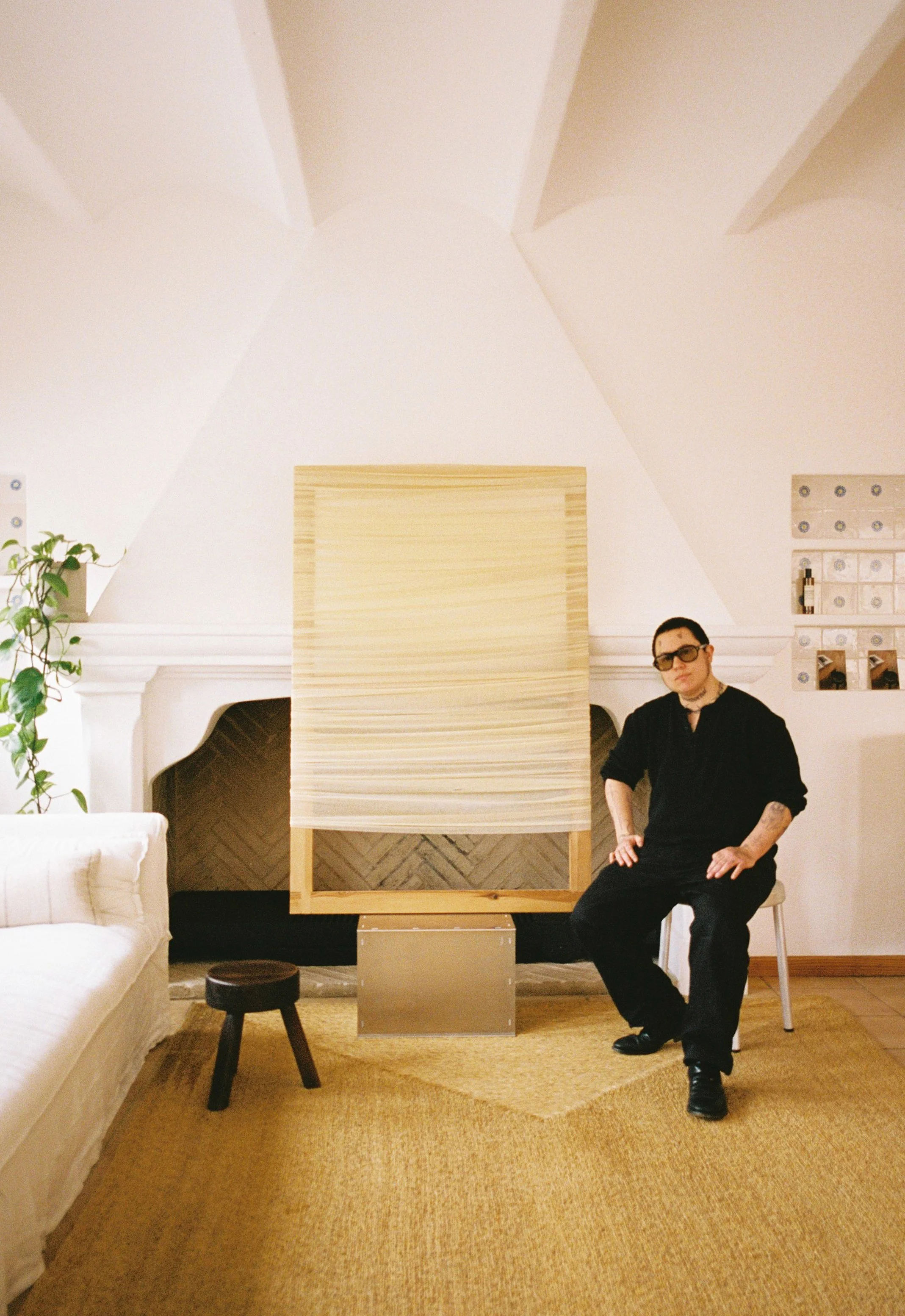
James’s visual art practice is rooted in the philosophies of wabi-sabi and minimalism, balancing organic imperfection with intentional structure. His work embraces raw materials such as gauze, plaster, and natural textures, yet remains guided by disciplined lines and a sense of architectural order. This tension between softness and precision forms the core of his creative language.
He describes his work as decorative in purpose, yet meditative in effect—art that evokes stillness, warmth, and a subtle emotional presence within a space. Early in his practice, color played an essential role. Over time, his process evolved toward reduction and restraint, gradually stripping back pigment and ornament until only the essential remained.
Today, his pieces often feel partially unfinished and raw, yet they are always resolved—complete in their incompleteness. In constructing his works, James sees himself not only as an artist but as an architect, building space, balance, and structure from the frame outward.


